
Safer at Home: Racialized Senior Women's Health & Medical Intelligence Pilot
About the Pilot Project
Safer at Home: Racialized Senior Women Health & Medical Intelligence Pilot is a free program for racialized women aged 65 and older who live alone in the Greater Toronto Area. It is designed to add an extra layer of safety, connection, and health‑system support for elders who often manage complex health issues on their own.
Through this pilot, Global Medical Intelligence Group treats participants as clients, not just “recipients,” by keeping key health information in a secure system and providing practical help after emergencies, hospital visits, and primary diagnoses.
Why Racialized Women Living Alone?
Racialized senior women in the GTA are more likely to live with lower income, language barriers, and multiple chronic conditions, all while shouldering caregiving histories and lifetime discrimination. Many live alone without consistent help to manage hospital visits, medical letters, or confusing instructions.
Living alone can increase the risk of social isolation, falls, and delayed care. When something serious happens, many elders and their families are left trying to interpret medical information on their own. This pilot focuses on racialized women 65+ who live alone, so they are not left navigating these moments in isolation.
What Participants Receive
Eligible participants (racialized women 65+ who live alone in the GTA) will receive, at no cost:
Safer at Home bracelet
A program bracelet that identifies them as part of the Safer at Home pilot and displays Global Medical Intelligence Group’s support line with clear instructions that 911 must always be called first in an emergency.Secure client profile and health information
A confidential client file in our secure medical‑intelligence system, which can include:Health conditions and medications
Names of doctors and clinics
Emergency contact information
Notes on mobility, home safety, and recent health events
Health & Medical Intelligence support
One dedicated navigation and advocacy session within three months of enrollment (or after a significant health event), where Global Medical Intelligence Group helps the senior and/or their family:Understand what happened in the hospital or clinic.
Organize papers, discharge notes, and instructions.
Prepare questions for their own doctors and care providers.
Identify community supports and follow‑up steps.
What Our Health Liaison Does
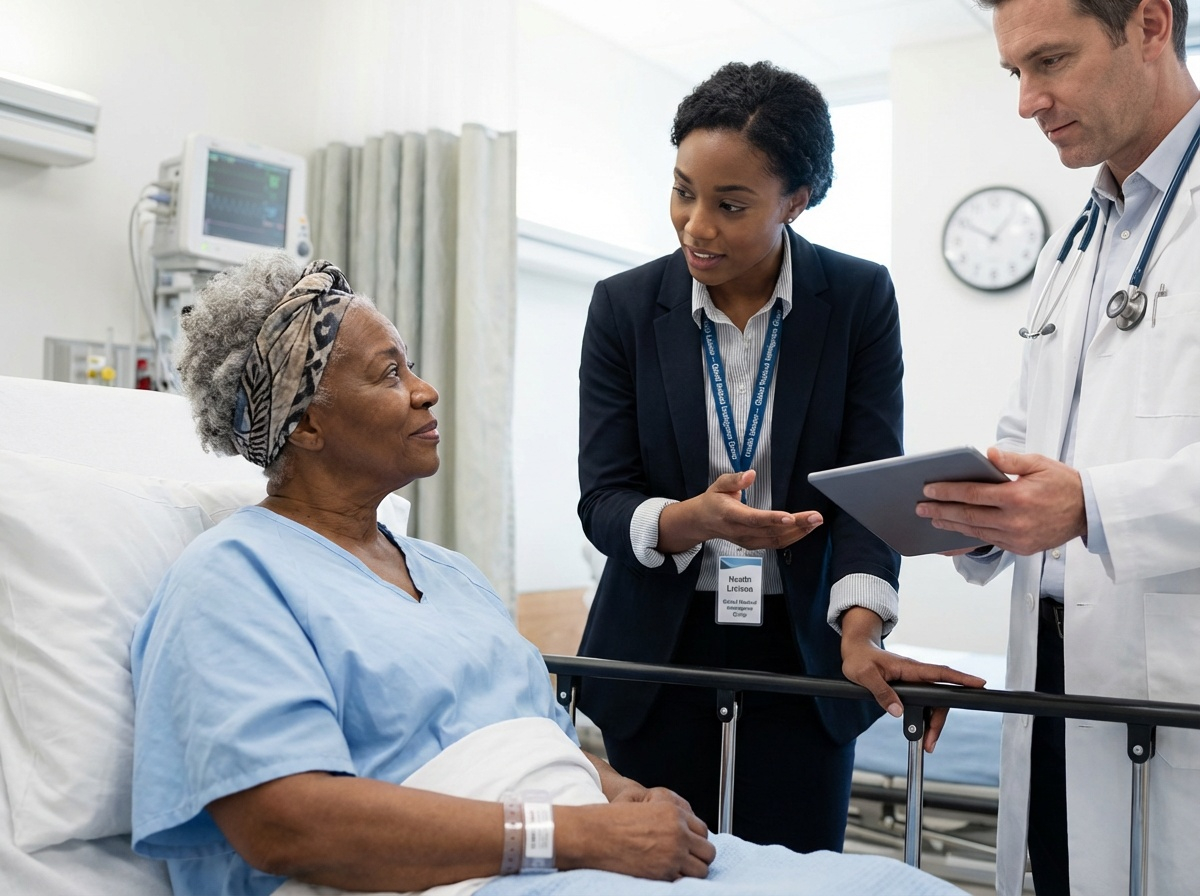
Each participant is supported by a Health Liaison from Global Medical Intelligence Group.
The Health Liaison can:
Help gather and organize medical information and letters
Explain medical terms in plain language.
Help the senior and their family get ready for important appointments.
With planning and resources, sometimes accompany the senior to key appointments or surgery discussions to take notes and support communication.
The Health Liaison does not replace doctors, nurses, or 911. Their role is to help participants understand their care, ask better questions, and feel less alone in the process.
How the Pilot Works
(click on + for more information)
-
A senior, family member, neighbour, faith leader, or community worker contacts Global Medical Intelligence Group about a racialized woman 65+ who lives alone in the GTA.
We confirm basic eligibility and schedule an intake by phone or virtual visit.
-
We complete a structured intake, capturing health, supports, and home situation.
The participant signs consent so we can securely store information and provide navigation and advocacy support.
-
The senior receives a Safer at Home bracelet and a simple information sheet that explains:
Call 911 first in any emergency
When and how to contact Global Medical Intelligence Group
What the Health Liaison can and cannot do
-
If the senior has a fall, hospitalization, or major change in health, they or their family can contact Global Medical Intelligence Group.
We provide at least one focused Health & Medical Intelligence session, and additional follow‑up as resources allow.
With the participant’s permission, we may liaise with family and, in some cases, accompany them to high‑stakes appointments.
-
With participants’ permission, anonymized information from the 50 seniors will help show where racialized senior women living alone get stuck in the health system, and what kinds of navigation and advocacy support make the biggest difference.
These insights will inform future funding applications and partnerships, with the goal of scaling or adapting the model across the GTA.
Who can refer and how to get involved?
Racialized women 65+ who live alone in the GTA can refer themselves.
Family members, neighbours, faith leaders, housing workers, and community agencies can also refer elders they support (with the elder’s consent).